


India Police Invoke Anti-Terror Law as Delhi Blast Leaves 9 Dead


In a chilling turn of events, India Police invoke anti-terror law after a powerful blast ripped through Delhi, claiming nine innocent lives and injuring several others. The explosion, which occurred during the early evening rush hour, has sent shockwaves across the nation. Authorities say that preliminary evidence points towards a meticulously planned act of terror, prompting swift and decisive action. As India Police invoke the strict Unlawful Activities (Prevention) Act (UAPA), the investigation has entered a critical phase, with multiple agencies now coordinating efforts to trace the perpetrators behind the deadly blast.
According to early reports, the explosion took place near a crowded marketplace in central Delhi, a location known for heavy foot traffic and dense commercial activity. Panic spread instantly as shopkeepers and bystanders scrambled for safety amidst the smoke and debris. Within minutes, emergency services rushed to the site, and forensic teams began collecting evidence to identify the nature of the explosives used. India Police invoke special anti-terror units to analyze CCTV footage, intercept suspicious communications, and follow leads that could reveal possible links to extremist networks operating both inside and outside India.
Eyewitnesses describe scenes of chaos and despair, with people crying for help as rescuers worked tirelessly to move the injured to nearby hospitals. The Delhi Police Commissioner stated that this was not a random act but a deliberate attempt to instill fear among citizens. As India Police invoke extraordinary powers under UAPA, several suspects have already been detained for questioning, and multiple cities have been placed under heightened alert. Security has been intensified at transport hubs, government buildings, and public landmarks, ensuring that no further incidents disrupt national peace.
Officials from the National Investigation Agency (NIA) and Intelligence Bureau (IB) have joined hands with the Delhi Police to uncover the broader conspiracy. When India Police invoke the anti-terror law, it signals the seriousness of the case and the government’s zero-tolerance stance against terrorism. Experts believe that such swift action sends a strong message that the state machinery will not hesitate to use its full strength to protect the country and its people. This is not the first time India Police invoke UAPA provisions; similar measures have been taken in the past during major terror attacks, which helped bring key culprits to justice.
Political leaders across party lines have condemned the attack, urging unity and resilience in the face of terror. Prime Minister Narendra Modi expressed his condolences to the victims’ families and assured that the culprits will face the harshest punishment under the law. As India Police invoke anti-terror law in full force, citizens are urged to remain vigilant, report suspicious activities, and support law enforcement’s ongoing investigation. The nation mourns the loss of innocent lives, but the resolve to fight terrorism remains stronger than ever.
Why India Police Invoke Stringent UAPA Provisions Amid Rising Threats
In the wake of growing national security challenges, India Police invoke stringent UAPA provisions to counter the escalating threats of terrorism, radicalization, and organized crime. The Unlawful Activities (Prevention) Act, or UAPA, has become one of the most powerful legal tools for law enforcement agencies in India to address activities that endanger the sovereignty and integrity of the nation. Recent incidents, including coordinated bomb blasts and cyber-linked terror plots, have underscored the urgent need for firm legal measures. It is in this context that India Police invoke the UAPA — a move that reflects both caution and determination to protect citizens from violent extremism.
Over the past few years, India has witnessed a concerning rise in cross-border terror funding, sleeper cells, and radical networks that exploit technology for recruitment and planning. Whenever intelligence agencies detect credible threats, India Police invoke the UAPA to ensure that suspects can be detained and interrogated without procedural delays. This allows investigators to trace the chain of command behind potential attacks and prevent further loss of life. The act also empowers police to seize assets, freeze bank accounts, and restrict the movement of individuals suspected of aiding terrorism, thereby cutting off crucial support systems that sustain extremist operations.
The decision to invoke UAPA is never taken lightly. India Police invoke this law only when traditional criminal provisions are insufficient to deal with the magnitude or intent of an offense. The act’s broad scope covers activities ranging from terror financing to inciting communal violence and spreading hate propaganda online. Law enforcement officers emphasize that the move is preventive rather than reactive — a strategy aimed at neutralizing threats before they manifest into large-scale violence. As India Police invoke these stringent measures, it not only strengthens national defense but also reassures citizens that their safety remains the government’s top priority.
Critics, however, have occasionally raised concerns about potential misuse of the UAPA. Civil rights groups argue that the law’s extended detention periods and limited bail options could affect personal liberties. Yet, officials maintain that strict judicial oversight ensures balance between national security and individual rights. In times when global terrorism networks are adapting to new digital and transnational forms, India Police invoke the UAPA to keep pace with evolving threats. This adaptability is crucial for maintaining the rule of law in an era where extremism can spread rapidly across borders.
In essence, every time India Police invoke stringent UAPA provisions, it represents the country’s unyielding stand against forces that aim to destabilize peace and harmony. It is not merely a legal decision but a reflection of national resilience — a statement that India will not bend to the fear of terrorism. As rising threats continue to challenge internal security, the invocation of UAPA stands as a necessary shield, safeguarding the democratic spirit and unity of the nation.
India Police Invoke Emergency Security Measures Across the Capital
In a move reflecting heightened vigilance, India Police invoke emergency security measures across the national capital following a series of intelligence alerts and recent violent incidents. Delhi, often considered the heartbeat of the nation, has now turned into a heavily guarded zone as authorities deploy thousands of additional personnel at metro stations, airports, shopping malls, and government complexes. The decision to enhance surveillance and conduct citywide checks comes after credible threats indicating possible terror activities. As India Police invoke these emergency protocols, the primary focus is on public safety, rapid response, and maintaining law and order amid growing national concerns.
The Delhi Police Commissioner has confirmed that all district units have been directed to remain on 24-hour standby. As India Police invoke advanced security systems, special units equipped with sniffer dogs, bomb disposal squads, and drone surveillance teams have been deployed in sensitive areas. Checkpoints have been intensified along key roads and highways connecting the capital to neighboring states like Haryana and Uttar Pradesh. The move, officials say, is preventive in nature but critical in ensuring that no potential threat slips through unnoticed. Random vehicle inspections, increased patrolling in crowded markets, and verification drives in residential zones have become the new norm as part of this massive operation.
Public places like Connaught Place, India Gate, and Chandni Chowk — usually bustling with activity — are now under constant watch. Security cameras have been upgraded with facial recognition systems to detect individuals with criminal or terror-linked histories. As India Police invoke these high-level security arrangements, they are also collaborating with intelligence agencies such as the Intelligence Bureau (IB) and the National Investigation Agency (NIA) to monitor communications and analyze suspicious digital footprints. The collaboration marks one of the most extensive security integrations in recent years, blending on-ground vigilance with advanced technological surveillance.
The heightened security comes amid a tense national backdrop, where recent blasts and intercepted terror communications have exposed vulnerabilities in metropolitan safety. As India Police invoke emergency measures, officials emphasize that this is not just a temporary response but a long-term restructuring of how the city manages internal security. Mock drills, rapid evacuation plans, and coordination between local police stations and emergency services have been intensified to ensure immediate readiness. Even schools, corporate offices, and public transport operators have been advised to strengthen their internal safety protocols and remain alert for any unusual activity.
Despite the visible police presence and strict checks, authorities have appealed to the public to remain calm and cooperative. Citizens have been urged to report abandoned bags, unattended vehicles, or suspicious behavior to the nearest police station. As India Police invoke emergency security measures, the capital stands united in its commitment to safety and vigilance. The operation reflects not only a law enforcement effort but a collective stance by the people and the administration against any threat to national peace and stability.
When and Why India Police Invoke Toughest Laws in Terror-Linked Cases
In moments of national crisis and grave threats to security, India Police invoke the toughest laws available to ensure that justice is swift and the country’s safety remains uncompromised. These stringent measures are typically applied during cases involving terrorism, cross-border extremism, or organized conspiracies aimed at destabilizing peace. The Unlawful Activities (Prevention) Act (UAPA) stands at the center of such legal actions, providing law enforcement agencies the authority to act decisively against those plotting violence or aiding terror operations. When India Police invoke this act, it signifies that the case is not ordinary — it’s one that challenges the very fabric of national security.
The timing of such invocations often depends on the severity of the incident and the intelligence gathered. When India Police invoke the toughest laws, it usually follows credible evidence of planned attacks, illegal arms circulation, or connections to global terror networks. For example, in the aftermath of major blasts or coordinated attacks, the police and intelligence agencies work jointly to determine whether the suspects are part of a larger extremist ecosystem. If the evidence suggests intent to harm the nation’s sovereignty, UAPA and other anti-terror provisions are immediately enforced. This legal action allows investigators greater control over detentions, interrogations, and asset seizures — crucial steps for dismantling terror cells before they strike again.
The primary reason India Police invoke these strict laws is the unique nature of terror-linked crimes. Unlike ordinary offenses, terrorism often involves multiple actors spread across regions or even nations, using encrypted communication and hidden funding routes. Traditional criminal laws, with their procedural limitations, often fail to address such complexities effectively. Therefore, when India Police invoke the toughest legal frameworks, it gives them extended powers to act proactively — to prevent, not just punish. This includes the ability to detain suspects longer for questioning, freeze suspicious financial transactions, and collaborate internationally under anti-terror treaties.
However, such powers also come with responsibility and scrutiny. Civil rights advocates frequently question the potential misuse of these provisions, arguing for stronger oversight and transparency. Yet, security experts insist that in a world where terror tactics evolve rapidly, India Police invoke these laws only after comprehensive assessment and approval from higher authorities. The ultimate goal is not oppression, but protection — ensuring that no individual or organization can exploit democratic freedoms to threaten innocent lives.
Historically, India Police invoke the toughest laws following incidents that expose vulnerabilities in public safety, from the 2008 Mumbai attacks to recent terror plots intercepted in northern states. Each invocation reflects a moment of national resolve — an assertion that the country will respond with strength and unity against forces of chaos. When India Police invoke these laws, it sends a clear message to perpetrators everywhere: India will not yield to terror, and its guardians will use every legal tool at their disposal to defend peace, justice, and the lives of its citizens.
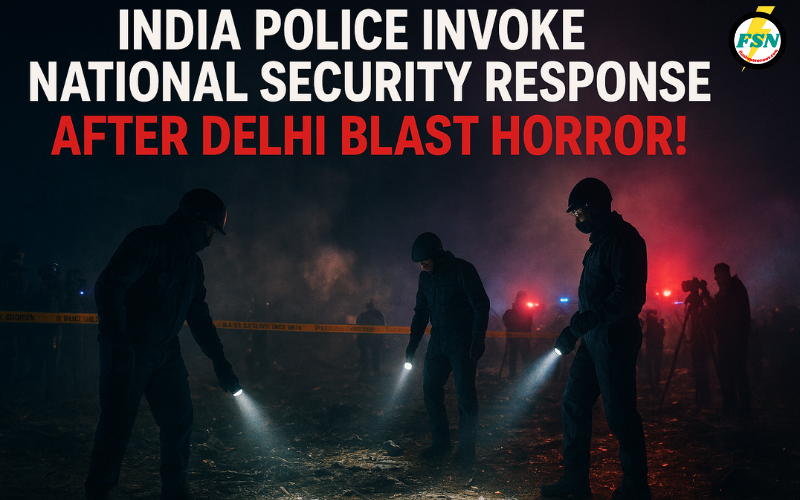
India Police Invoke National Security Response After Delhi Blast Horror
In the aftermath of the devastating Delhi blast that claimed nine lives and left dozens injured, India Police invoke a full-scale national security response to prevent further tragedies and bring the culprits to justice. The explosion, which tore through a busy commercial area, has shaken the capital to its core. Eyewitnesses described scenes of chaos and panic as rescue teams raced to save lives amidst smoke and debris. Within hours, India Police invoke emergency protocols under the Unlawful Activities (Prevention) Act (UAPA), marking the beginning of one of the largest coordinated anti-terror operations in recent years.
Authorities have confirmed that multiple agencies, including the National Investigation Agency (NIA), the Intelligence Bureau (IB), and Delhi Police’s Special Cell, are working in tandem to track down those responsible. As India Police invoke these national security measures, several suspects have been detained, and interrogation centers have been set up in high-security zones. Forensic experts are analyzing explosive residues, mobile data, and CCTV footage from nearby areas. Sources reveal that the blast carried the signature of a professionally executed act, indicating the possible involvement of an organized terror module. The deployment of additional forces across key landmarks and public spaces reflects the seriousness of the situation.
This is not the first time India Police invoke a national security framework following a major terror-linked incident. Over the years, such responses have proven effective in both averting subsequent attacks and dismantling sleeper cells. In this case, the police have stepped up their surveillance across Delhi-NCR, setting up over 200 additional checkpoints and conducting surprise inspections at bus terminals, metro stations, and crowded markets. As India Police invoke heightened security, communication networks are being closely monitored for suspicious activity, ensuring that no escape routes remain open for those involved in the blast.
Officials say that this comprehensive security response is not just about reaction but about prevention. When India Police invoke national security mechanisms, it means a multi-layered defense system is activated — one that combines intelligence analysis, cyber tracking, and on-ground action. Emergency response teams are now stationed at vulnerable sites, and citizens have been urged to stay alert and cooperate with ongoing operations. The Ministry of Home Affairs has also directed neighboring states to enhance border checks and share intelligence inputs in real time.
Political leaders across party lines have praised the swift action, urging unity and calm amid public fear. Prime Minister Narendra Modi condemned the attack, calling it a “cowardly act” meant to divide the country, and assured that the perpetrators will face the harshest punishment under law. As India Police invoke a robust national security response, Delhi stands under the protective watch of its defenders — determined to heal, recover, and emerge stronger. This tragedy has once again highlighted the importance of preparedness, coordination, and collective vigilance in confronting terrorism head-on.