


Horror Unfolds: Kenya Plane Crash Claims 11 Lives Near Maasai Mara
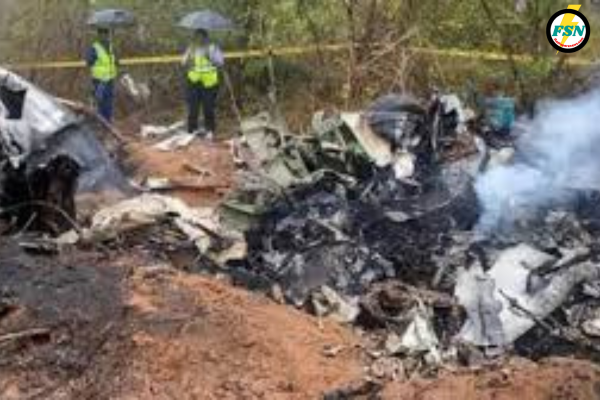

A devastating tragedy has shaken Kenya after a Kenya Plane Crash claimed 11 lives near the world-famous Maasai Mara National Reserve. The Kenya Plane Crash occurred when a small aircraft, carrying tourists and crew members, went down in the remote plains just a few kilometers from the reserve’s boundary. The sudden and horrifying event has left the nation mourning and raised serious questions about flight safety in the region.
According to initial reports, the Kenya Plane Crash happened shortly after takeoff from an airstrip used for safari tourism. Witnesses from nearby villages described hearing a loud explosion followed by plumes of black smoke rising from the crash site. Emergency response teams and local residents rushed to the scene, but by the time they arrived, the aircraft was engulfed in flames. All 11 people on board, including foreign tourists, tragically lost their lives in this heartbreaking Kenya Plane Crash.
The incident has drawn nationwide attention as the Maasai Mara is one of Africa’s most visited wildlife destinations, attracting thousands of international visitors each year. Officials from Kenya’s Civil Aviation Authority have already launched a full-scale investigation to determine the cause of the Kenya Plane Crash. Preliminary findings suggest possible technical issues or adverse weather conditions, though nothing has been confirmed. Experts are analyzing the wreckage and flight data to uncover the sequence of events that led to the disaster.
Eyewitnesses recall the terrifying sight of the aircraft spiraling downward before impact. One witness, a safari guide stationed near the reserve, said the plane appeared to struggle for altitude moments before it went down. Locals immediately contacted authorities, but the remote terrain made rescue operations difficult. Helicopters were later deployed to transport investigators and recovery teams to the crash site, marking a somber day for both Kenya’s aviation sector and its tourism industry.
Kenyan leaders have expressed deep sorrow over the loss of lives, calling the Kenya Plane Crash a national tragedy. The Ministry of Transport has pledged to strengthen safety protocols for domestic flights, especially those serving tourist destinations. Meanwhile, families of the victims are being assisted by officials as they come to terms with this painful loss. Across social media, messages of condolence have poured in from around the world, reflecting global empathy for the victims of the Kenya Plane Crash.
As the investigation continues, authorities hope to find answers that can prevent such heartbreaking incidents in the future. The serene skies over Maasai Mara, once symbols of adventure and beauty, now carry the weight of sorrow following the catastrophic Kenya Plane Crash that claimed 11 innocent lives.
What Caused the Kenya Plane Crash? Authorities Launch Urgent Investigation
The tragic Kenya Plane Crash near the Maasai Mara National Reserve has left the nation in shock and mourning as authorities begin a full-scale investigation to uncover what went wrong. The Kenya Plane Crash claimed 11 lives, including tourists and crew members, sparking urgent questions about air safety and maintenance standards in the region’s tourism aviation sector. As rescue operations conclude, the focus has now shifted to understanding the cause of this devastating Kenya Plane Crash.
Officials from Kenya’s Civil Aviation Authority (KCAA) and the Ministry of Transport have joined hands to examine flight records, weather conditions, and maintenance logs of the ill-fated aircraft. Preliminary reports suggest that the Kenya Plane Crash may have been triggered by a technical malfunction shortly after takeoff from an airstrip used frequently by safari operators. Witnesses described the plane flying unusually low before nose-diving into the ground, bursting into flames upon impact. The rapid sequence of events has made investigators suspect a possible engine failure or loss of control during flight.
A team of aviation experts has been dispatched to the crash site to collect debris and examine the black box, which could hold critical clues about what caused the Kenya Plane Crash. Authorities are also interviewing witnesses and air traffic controllers who were in contact with the pilot before communication was lost. Local residents living near the Maasai Mara described hearing a loud explosion followed by thick smoke, suggesting a catastrophic failure mid-air. However, officials remain cautious about drawing early conclusions until the final report is ready.
Weather patterns during the flight are also being analyzed. While early data indicates partly cloudy skies and moderate wind conditions, experts are exploring whether turbulence or visibility issues might have contributed to the Kenya Plane Crash. Kenya’s aviation safety standards have generally improved in recent years, but this tragic event underscores the need for strict oversight, especially for charter flights that cater to high volumes of tourists during peak safari seasons.
Government representatives have promised transparency throughout the investigation, assuring the public that the findings of the Kenya Plane Crash probe will be made available as soon as possible. Meanwhile, airline operators across Kenya are being urged to conduct emergency inspections of their fleets. Families of the victims are also being offered counseling and support as they await answers.
The Maasai Mara region, renowned for its breathtaking landscapes and wildlife safaris, has now become the site of one of Kenya’s most sorrowful aviation disasters. As the nation grieves, investigators are racing against time to piece together the final moments of the ill-fated flight and determine exactly what caused the Kenya Plane Crash, hoping to ensure such a tragedy never strikes again.
Eyewitness Accounts Reveal Terrifying Moments Before the Kenya Plane Crash
Moments before the devastating Kenya Plane Crash near the Maasai Mara National Reserve, several eyewitnesses watched in horror as the small aircraft struggled to stay airborne. What began as a routine flight carrying tourists to one of Africa’s most beautiful safari destinations ended in unimaginable tragedy. As details emerge, locals and safari workers who saw the Kenya Plane Crash unfold are sharing haunting descriptions of the final moments before impact.
According to eyewitnesses, the plane appeared to be flying lower than usual just minutes after takeoff. Some described hearing a loud, sputtering noise coming from the engines before the aircraft suddenly tilted to one side. “It was making a strange sound — like it was losing power,” said a safari guide stationed near the reserve. Within seconds, the aircraft disappeared behind a small hill, followed by a deafening explosion. The crash was so powerful that villagers several kilometers away felt the ground tremble. This firsthand testimony paints a chilling picture of how fast the Kenya Plane Crash unfolded.
Local residents rushed toward the thick plume of smoke rising from the site, hoping to find survivors. Witnesses recount seeing debris scattered across the savannah, with fires burning through the wreckage. “We ran as fast as we could, but the flames were too strong,” said a nearby farmer. Emergency responders soon arrived, but it was already too late — all 11 people on board perished in the Kenya Plane Crash. The emotional weight of the tragedy has deeply affected the Maasai Mara community, many of whom work closely with tourism flights that operate daily in the area.
Investigators have interviewed several of these witnesses to reconstruct the aircraft’s final trajectory. Their accounts will play a crucial role in determining what caused the Kenya Plane Crash. Many reported that weather conditions were relatively clear, which suggests mechanical failure or human error might have been contributing factors. However, officials are withholding conclusions until the black box data is analyzed. The powerful testimonies of those who saw the disaster unfold could help aviation experts piece together the final minutes before the crash.
For those who live near the Maasai Mara, the sight of a plane soaring over the grasslands is common. But now, that familiar view carries a painful memory. The Kenya Plane Crash has not only claimed innocent lives but also shaken the confidence of many who rely on aviation for tourism and transportation. As Kenya mourns this heartbreaking loss, the haunting words of witnesses remind the world how fragile life can be in the face of sudden tragedy. Their stories ensure that the victims of the Kenya Plane Crash will never be forgotten.
Rescue and Recovery Efforts Intensify After the Kenya Plane Crash Tragedy

In the aftermath of the devastating Kenya Plane Crash near the Maasai Mara National Reserve, rescue and recovery teams have been working tirelessly to retrieve bodies, secure evidence, and support grieving families. The Kenya Plane Crash, which claimed 11 lives, has sparked an enormous emergency response effort, drawing in local authorities, aviation experts, and humanitarian organizations. The challenging terrain of the Maasai Mara plains has made the mission emotionally and physically demanding, but rescuers remain determined to bring closure to the victims’ families.
Soon after the Kenya Plane Crash, villagers and safari guides were among the first to arrive at the site, braving flames and thick smoke in an attempt to help. Local witnesses described heartbreaking scenes as they searched through the wreckage for survivors, but the intense fire left little hope. Within hours, Kenya’s Civil Aviation Authority (KCAA), Red Cross, and the National Disaster Management Unit (NDMU) had mobilized emergency teams to assist in rescue and recovery. Helicopters were deployed to transport officials, medical personnel, and forensic experts to the crash site, marking a somber day for Kenya’s aviation history.
As part of the recovery phase, authorities have secured the perimeter of the Kenya Plane Crash site to preserve crucial evidence for investigation. Specialists in aviation forensics are meticulously documenting debris patterns, collecting flight data components, and retrieving the black box — which holds vital information about the aircraft’s final moments. The recovery teams are also working closely with pathologists to identify the victims through DNA testing and personal belongings. This process is being handled with utmost care and respect, as officials emphasize the need for dignity in dealing with the aftermath of such a horrific tragedy.
The Kenya Plane Crash has also prompted local hospitals to remain on standby, prepared to handle any remains or forensic samples brought in by emergency crews. Psychologists and trauma counselors are assisting first responders and families of the victims, offering emotional support during this difficult time. The Kenyan Red Cross has established communication centers to update relatives and coordinate humanitarian assistance. Despite the exhaustion faced by rescue workers, their dedication continues to inspire hope amid the despair.
International aviation authorities have also expressed readiness to assist Kenya in the technical aspects of the Kenya Plane Crash investigation. Neighboring nations have offered resources, and global airlines have sent messages of condolence. Meanwhile, local leaders have praised the bravery of those who rushed to the scene despite the risks. Their quick action ensured that critical evidence was secured early, which will help investigators uncover the true cause of the Kenya Plane Crash.
The recovery mission remains ongoing, with authorities emphasizing that every effort is being made to ensure accuracy, compassion, and justice. For now, the Maasai Mara — usually a symbol of beauty and life — stands silent, mourning the souls lost in the heartbreaking Kenya Plane Crash that shook Kenya and the world.
Global Condolences Pour In Following the Deadly Kenya Plane Crash
The devastating Kenya Plane Crash near the Maasai Mara National Reserve has drawn an outpouring of grief and sympathy from around the world. As news of the tragic Kenya Plane Crash spread, global leaders, international organizations, and ordinary citizens took to social media to express condolences to the victims’ families and the people of Kenya. The incident, which claimed 11 lives including both Kenyan nationals and foreign tourists, has become a moment of shared mourning that transcends borders.
Kenya’s President led the nation in paying tribute to the victims of the Kenya Plane Crash, calling it “a dark day for our country and for all who believe in the beauty of human connection through travel.” He extended heartfelt condolences to the bereaved families and assured that the government would leave no stone unturned in investigating the cause. Messages of solidarity soon followed from leaders across Africa, Europe, and Asia, many of whom praised Kenya’s prompt emergency response and vowed to support the ongoing investigation into the Kenya Plane Crash.
In the United States and the United Kingdom — home to some of the foreign tourists onboard — embassies in Nairobi released official statements mourning the loss of their citizens. The European Union also expressed deep sorrow, noting that the Kenya Plane Crash serves as a stark reminder of the risks associated with air travel and the importance of global cooperation in aviation safety. International humanitarian organizations such as the Red Cross and the United Nations offered condolences and praised the tireless work of local rescue teams who responded immediately after the crash.
Across social media platforms, thousands of people shared messages of empathy, prayers, and heartfelt tributes. Hashtags related to the Kenya Plane Crash quickly trended worldwide as people from different backgrounds united in grief. Many shared photos of the Maasai Mara, reflecting on its natural beauty and how a place known for life and wonder had turned into a scene of sorrow. Kenyans living abroad organized candlelight vigils, while tourism operators in Nairobi and the Mara temporarily halted flights as a gesture of respect.
Airlines from around the world have also expressed their condolences and pledged to cooperate with investigators to improve flight safety standards. The International Civil Aviation Organization (ICAO) has offered technical assistance to ensure a transparent probe into the Kenya Plane Crash. Aviation experts say the lessons learned from this tragedy could help prevent future incidents and strengthen the safety of regional flights.
As Kenya mourns, the emotional impact of the Kenya Plane Crash continues to be felt globally. The messages of solidarity pouring in from every corner of the world have reminded everyone that in moments of great loss, humanity stands together. Though grief fills the skies over the Maasai Mara, the compassion and unity shown worldwide bring a glimmer of comfort to those affected by the heartbreaking Kenya Plane Crash.