


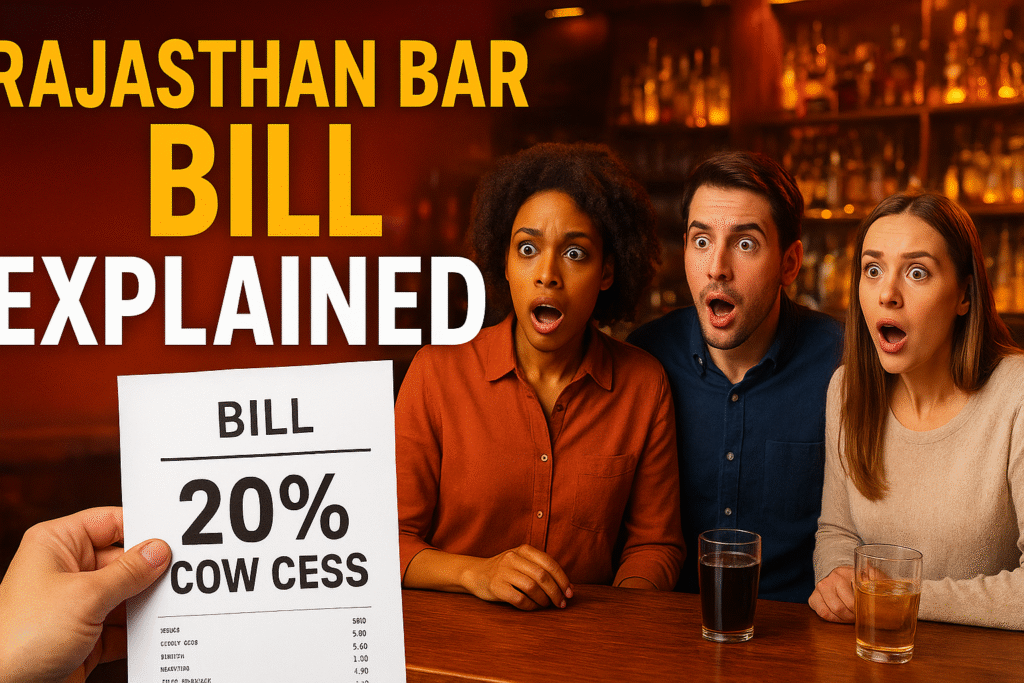
What Is the Rajasthan Bar Bill and Why It’s Making Headlines
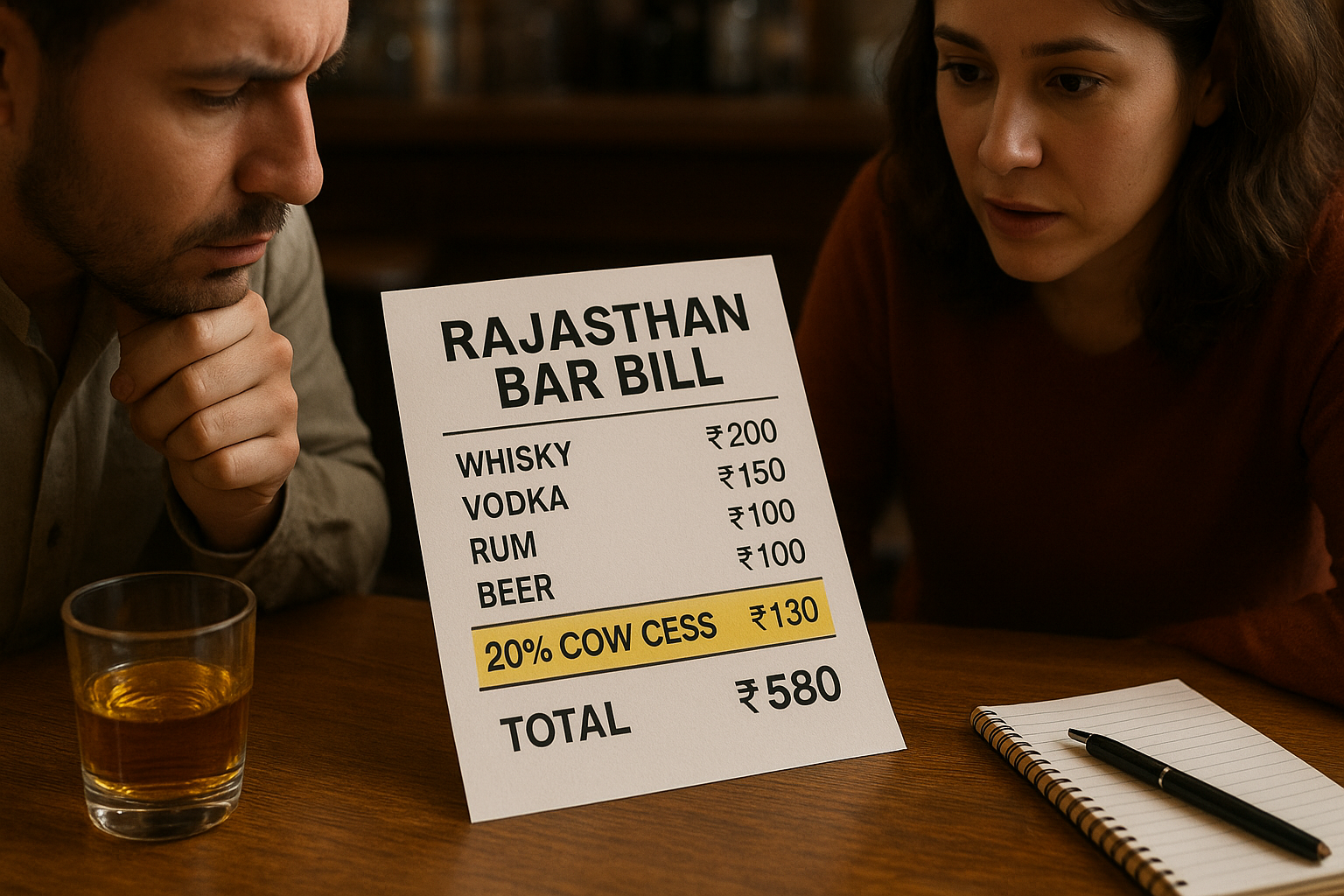

The Rajasthan Bar Bill has recently taken social media by storm after a bar bill showing a 20% “cow cess” on liquor went viral. Many citizens were surprised to see this additional charge, sparking heated debates online. But what exactly is the Rajasthan Bar Bill, and why has it become such a major talking point across the country? Let’s break down the details, background, and the real reason this move has stirred both curiosity and controversy.
At its core, the Rajasthan Bar Bill refers to the state government’s policy of levying an extra cess on the sale of alcohol to fund cow welfare initiatives. This 20% “cow cess” is charged over and above the regular liquor price and taxes, making the final bill noticeably higher. The idea behind this decision, as per government sources, is to generate dedicated revenue for maintaining cow shelters and supporting rural farmers who depend on cattle for livelihood. In a state where cattle hold deep cultural and economic value, this measure aligns with Rajasthan’s long-standing tradition of protecting and promoting animal welfare.
However, the viral post showing the Rajasthan Bar Bill has ignited mixed emotions. Supporters see it as a noble and socially responsible initiative — a creative way to fund cow welfare without burdening taxpayers directly. They argue that using liquor revenue, a non-essential luxury expense, for social good is a balanced approach. On the other hand, critics believe that the Rajasthan Bar Bill adds unnecessary financial strain on consumers and bar owners. Many have questioned the transparency of how these funds are used and whether the cess actually reaches the intended beneficiaries.
The controversy around the Rajasthan Bar Bill also highlights the larger debate about state-imposed cesses and their accountability. While some states like Uttar Pradesh and Madhya Pradesh already impose similar cow cesses, Rajasthan’s 20% rate is one of the highest in India. Business owners in the hospitality industry worry this could reduce bar footfall and affect tourism, especially in cities like Jaipur and Udaipur, where nightlife and dining are major attractions. Consumers too are expressing frustration online, noting that such levies make social outings more expensive.
Interestingly, the Rajasthan Bar Bill has also opened a wider conversation about how states can creatively fund social initiatives without over-relying on central grants. Proponents argue that if the funds are used efficiently, it can serve as a model for sustainable welfare financing. Critics, however, demand stronger oversight mechanisms to ensure transparency and accountability in how the collected cess is spent.
As discussions continue, the Rajasthan Bar Bill stands at the intersection of culture, economics, and governance. It reflects the balancing act between upholding traditional values and managing modern fiscal realities — a reminder that every policy, even one written on a bar bill, can spark nationwide debate.
Understanding the 20% Cow Cess Under the Rajasthan Bar Bill
The Rajasthan Bar Bill recently grabbed headlines because of the inclusion of a 20% “cow cess” on liquor, leaving many patrons and observers curious about its purpose and impact. This additional charge is not just a random tax; it is a strategic initiative by the Rajasthan government aimed at funding cow welfare programs and supporting rural livelihoods. Understanding the nuances of this 20% cow cess under the Rajasthan Bar Bill is key to comprehending both the economic and social implications of the move.
Essentially, the 20% cow cess is an extra levy added to the base price of alcoholic beverages served in bars and restaurants across Rajasthan. It is collected separately from the standard state excise duty, making it visibly distinct on the Rajasthan Bar Bill. Government officials explain that the collected funds are earmarked specifically for cow shelters, veterinary care, and initiatives that promote sustainable cattle farming. This approach attempts to channel discretionary spending into a socially beneficial cause, reflecting the state’s cultural and religious emphasis on protecting cows.
The introduction of this 20% cow cess has generated mixed reactions among the public. Many citizens view it as a positive, socially responsible step. They appreciate the idea that a portion of what they spend on luxury items like alcohol is directed toward animal welfare. In this sense, the Rajasthan Bar Bill becomes more than just a statement of costs—it represents a model where social responsibility meets consumer activity.
However, not everyone has welcomed the change. Critics argue that the 20% cow cess under the Rajasthan Bar Bill disproportionately affects bar-goers and could indirectly impact bar revenues. Small businesses fear that higher bills might discourage patrons, especially in tourist-heavy areas like Jaipur, Udaipur, and Jodhpur. Furthermore, some skeptics question the transparency of how these funds are utilized, demanding clear reporting on the outcomes of the programs funded by the cess.
Interestingly, Rajasthan is not alone in imposing a cow-related cess on liquor. Several other states in India have similar levies, but the rate and implementation vary. The 20% cess under the Rajasthan Bar Bill is one of the higher rates, reflecting both the state’s commitment to the cause and its willingness to explore innovative funding mechanisms for social welfare programs.
In conclusion, understanding the 20% cow cess under the Rajasthan Bar Bill requires looking beyond the immediate increase in bar bills. It represents a combination of cultural respect, fiscal innovation, and social responsibility. While reactions remain divided, the cess has succeeded in drawing nationwide attention to how government policies can influence consumer behavior while supporting larger welfare goals.
Public Reaction: Mixed Opinions on the Rajasthan Bar Bill
The Rajasthan Bar Bill has sparked widespread public debate ever since the 20% “cow cess” on liquor made headlines. Social media platforms, news outlets, and discussion forums are filled with opinions, both in support of and against the new levy. The varied reactions reveal how a single policy can create a mix of admiration, frustration, and curiosity among citizens.
Supporters of the Rajasthan Bar Bill argue that the 20% cow cess is a socially responsible initiative. They appreciate that the additional charge on alcohol is directed toward funding cow welfare programs and rural development projects. Many feel that using discretionary spending on luxury items like liquor to support a cause of cultural and social significance is a clever and ethical approach. For them, the Rajasthan Bar Bill is not just a financial statement—it is a reflection of the state’s commitment to animal protection and sustainable agriculture.
On the other hand, critics have voiced strong concerns about the Rajasthan Bar Bill. Many consumers and bar owners feel that the 20% cess significantly increases the cost of social outings, making nightlife and dining experiences less affordable. Small business owners worry about declining customer footfall and reduced revenues, especially in tourist-heavy cities like Jaipur and Udaipur. Some critics also question the transparency and accountability of fund allocation, asking whether the money collected through the Rajasthan Bar Bill will truly reach cow shelters and welfare initiatives.
The reaction online has been equally mixed. Memes, debates, and opinion threads highlight the polarizing nature of the Rajasthan Bar Bill. While some praise the government for introducing an innovative funding model for social welfare, others express frustration at what they see as an additional financial burden. This digital chatter shows that while the policy has noble intentions, its execution and perception among the public remain points of contention.
Interestingly, the discussion around the Rajasthan Bar Bill also reflects a larger conversation about state levies and social responsibility. It raises questions about how governments can balance cultural priorities with economic realities, and how consumers respond when social initiatives intersect with everyday expenses. The mixed opinions indicate that while some citizens embrace the idea of contributing indirectly to welfare programs, others prioritize personal affordability and transparency.
Overall, the public reaction to the Rajasthan Bar Bill underscores the complex interplay between policy, culture, and economy. The discussions it has generated are a testament to the power of public opinion in shaping perceptions of government initiatives, proving that even a bar bill can become a symbol of broader societal debates.
How the Rajasthan Bar Bill Compares with Other States’ Liquor Taxes
The Rajasthan Bar Bill has drawn significant attention, not just for the 20% cow cess, but also for how it stacks up against liquor taxes in other Indian states. While Rajasthan’s approach is unique in its visibility and cultural focus, many states have long implemented additional levies on alcohol to fund social programs or state revenues. Comparing these policies provides context for understanding the broader implications of the Rajasthan Bar Bill.
In Rajasthan, the bar bill explicitly lists the 20% cow cess on liquor, making the charge highly transparent to consumers. This is different from states where additional taxes are included in the overall price and less visible. For instance, states like Uttar Pradesh and Madhya Pradesh also impose a cow cess or similar levies, but the rate often varies between 10% to 15%. The Rajasthan Bar Bill stands out because of the comparatively high rate, highlighting the state’s strong focus on cow welfare initiatives.
Several southern states, including Kerala and Karnataka, have also imposed extra duties on liquor, though these are mostly targeted at generating state revenue rather than funding a specific welfare cause. In these regions, the levy is typically blended with excise duty, and consumers may not see it separately itemized on the bill. The Rajasthan Bar Bill, in contrast, makes the contribution explicit, ensuring that patrons are aware their spending is directly supporting social welfare.
The economic impact of such levies also varies across states. While a 20% cess under the Rajasthan Bar Bill can noticeably increase the cost of drinks, in states with lower additional taxes, the effect on consumer behavior is less pronounced. Bar owners in Rajasthan have expressed concerns that the higher visible charge might affect footfall and customer spending patterns, particularly in tourist hotspots. Yet, supporters argue that the transparency and purpose-driven nature of the bill could encourage a sense of social responsibility among consumers.
Interestingly, the Rajasthan Bar Bill also sets a precedent for cultural and ethical taxation. Unlike other states, where additional levies primarily serve fiscal objectives, Rajasthan explicitly ties the tax to cow protection—a deeply rooted cultural and religious priority. This distinction has made the bill both a topic of curiosity and a model for innovative state-driven social funding.
By comparing the Rajasthan Bar Bill with other states’ liquor taxes, it becomes clear that Rajasthan has taken a bold and distinctive approach. The combination of high rates, transparency, and a culturally significant purpose makes the bill stand out, sparking nationwide discussion about the role of targeted levies in promoting welfare and responsible consumption
Future Impact of the Rajasthan Bar Bill on Consumers and Businesses
The Rajasthan Bar Bill and its 20% cow cess on liquor are likely to have far-reaching effects on both consumers and businesses across the state. While the immediate focus has been on public reaction, understanding the potential long-term impact can provide insight into how this policy might reshape spending patterns, business strategies, and even social perceptions of responsible consumption.
For consumers, the Rajasthan Bar Bill means higher costs for nightlife and social outings. Patrons of bars, pubs, and restaurants will now see an additional 20% levy clearly listed on their bills. While some consumers appreciate that this contribution is directed toward cow welfare and rural initiatives, others may feel the pinch in their discretionary spending. Over time, this could influence drinking habits, with some individuals reducing visits to bars or opting for home consumption, potentially altering consumer behavior in the hospitality sector.
From a business perspective, bar owners and restaurant operators face both challenges and opportunities. On one hand, the Rajasthan Bar Bill may temporarily affect footfall, particularly among price-sensitive customers. Small and mid-sized establishments might see a drop in revenue if patrons perceive the additional charge as excessive. On the other hand, businesses that effectively communicate the social purpose behind the cess could position themselves as socially responsible venues, potentially attracting a niche segment of ethically conscious consumers.
Tourism could also experience nuanced effects. Cities like Jaipur, Udaipur, and Jodhpur, which attract both domestic and international travelers, may witness initial surprise or frustration from visitors seeing the higher bar bills. However, tourists who value cultural and ethical practices might appreciate the transparency and the state’s effort to fund animal welfare. The Rajasthan Bar Bill therefore has the potential to redefine how socially responsible spending is perceived in leisure and hospitality.
Economically, if the revenue generated from the cow cess is managed transparently and used effectively for cow shelters, rural development, and veterinary care, it could strengthen local communities and provide a positive ripple effect. This could improve the state’s social infrastructure and even enhance the image of Rajasthan as a region committed to cultural and ethical priorities. Businesses might then leverage this narrative in their branding, turning a potential challenge into a reputational advantage.
In essence, the Rajasthan Bar Bill is more than a temporary addition to a bar receipt; it is a policy with lasting implications. Its impact on consumer behavior, business strategy, and social perceptions will unfold over time, offering lessons in balancing cultural values, economic realities, and public engagement. By bridging governance, commerce, and social responsibility, the bill exemplifies how even small fiscal measures can have broader societal consequences.