
How NASA Operates the International Space Station for Global Space Research
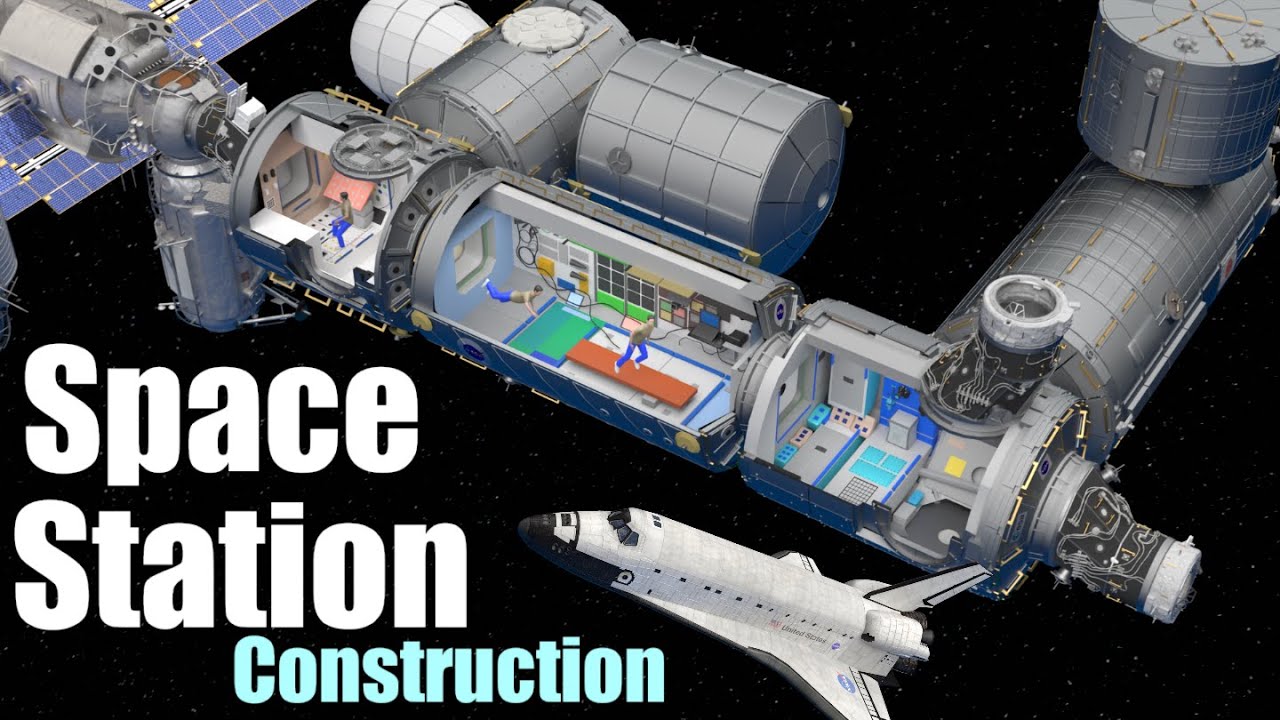
The International Space Station is one of the most advanced scientific laboratories ever built by humanity, orbiting Earth at nearly 28,000 km per hour. Managed through global cooperation, NASA plays a central role in coordinating operations, safety, research planning, and astronaut missions. The agency works closely with international partners to ensure the International Space Station runs smoothly 24 hours a day, supporting groundbreaking discoveries in science, medicine, and space technology.
NASA operates mission control primarily from Houston, Texas, where engineers and flight controllers monitor every system onboard. These include life support, power generation through solar arrays, temperature control, and communication systems. Every movement, experiment, and spacewalk is carefully planned months in advance to ensure astronaut safety and mission success. Through advanced robotics and automation, many tasks on the International Space Station can be controlled remotely from Earth, reducing risk to astronauts.
Research is the heart of operations aboard the station. Scientists worldwide submit experiment proposals, and NASA coordinates which studies will be conducted in microgravity. The International Space Station allows researchers to study how the human body reacts to space, how materials behave without gravity, and how plants grow in orbit. These studies help prepare for future missions to the Moon and Mars while also benefiting medical and industrial research on Earth.
Crew transportation is another major responsibility. NASA partners with private companies like SpaceX to transport astronauts and cargo safely. Modern spacecraft like Crew Dragon are designed to dock automatically, ensuring efficient crew rotation. This partnership allows the International Space Station to maintain continuous human presence in space, which has been ongoing since November 2000.
Daily life on the station is highly structured. Astronauts follow strict schedules balancing research, exercise, maintenance, and communication with Earth. Because microgravity causes muscle and bone loss, astronauts exercise for about two hours daily. NASA also monitors astronaut health in real time, ensuring crews remain physically and mentally fit during their stay on the International Space Station.
Communication is another critical part of operations. High-speed satellite links allow astronauts to communicate with mission control, scientists, and even their families. This constant connection helps NASA quickly solve technical problems and adjust research schedules if needed. Advanced data systems transmit experiment results instantly, allowing researchers on Earth to analyze findings without delay.
International collaboration remains the backbone of station success. Space agencies from Europe, Japan, Canada, and Russia contribute technology, astronauts, and research modules. This shared responsibility ensures the International Space Station remains a symbol of peaceful global cooperation and scientific progress in space exploration.
Why SpaceX Missions to the International Space Station Are Transforming Space Travel
Space missions to the International Space Station have entered a new era of innovation, efficiency, and cost reduction, largely due to the rise of private spaceflight partnerships. While government agencies like NASA built the foundation of human space exploration, commercial space companies have accelerated progress in ways that were once considered impossible. Today, regular missions to the International Space Station are no longer rare global events — they are becoming part of a sustainable space transportation system.
One of the biggest transformations is the dramatic reduction in launch costs. Traditional government-only missions were extremely expensive, limiting how often astronauts and cargo could be sent to orbit. Modern reusable rocket technology has changed this model completely. By landing and reusing rocket boosters multiple times, missions to the International Space Station are now more frequent and financially efficient. This cost efficiency opens the door for more scientific experiments, faster crew rotations, and expanded research opportunities.
Reliability and launch frequency have also improved significantly. In earlier decades, astronauts had to wait months or even years between launch windows. Now, missions to the International Space Station can be scheduled with greater flexibility. Faster launch turnaround times mean that emergency supplies, replacement crew members, or critical scientific equipment can reach orbit much sooner. This flexibility ensures continuous human presence in space and supports long-term research programs.
Technology innovation is another major factor transforming space travel. Modern spacecraft are equipped with advanced touch-screen controls, automated docking systems, and improved life-support technology. These features reduce astronaut workload and improve mission safety. Automated docking, in particular, has revolutionized how spacecraft approach and attach to the International Space Station, reducing human error risks and improving mission precision.
Cargo delivery systems have also evolved. Earlier missions relied on limited cargo capacity, but modern spacecraft can transport large quantities of scientific equipment, food supplies, and spare parts. This increased capacity allows astronauts on the International Space Station to conduct more experiments simultaneously. Scientific research now ranges from cancer studies to advanced material science and space agriculture.
Another major transformation is global accessibility to space. Commercial partnerships have allowed astronauts from more countries to participate in missions. This international cooperation expands scientific knowledge sharing and strengthens diplomatic relationships through peaceful space exploration. The International Space Station has become a global laboratory where multiple nations contribute research, technology, and astronaut training expertise.
Future space exploration depends heavily on lessons learned from these missions. Technologies tested during trips to the International Space Station are directly helping engineers design spacecraft for Moon and Mars missions. Long-duration life support systems, radiation protection techniques, and advanced navigation systems are all being refined through current orbital missions.
Human space travel is shifting from experimental exploration toward operational transportation. Regular missions to the International Space Station are proving that space travel can be reliable, repeatable, and scalable. This shift is laying the foundation for commercial space stations, space tourism, and deep-space human missions in the coming decades.
Top Scientific Experiments Happening Inside the International Space Station Right Now
The International Space Station is not just a place where astronauts live in orbit — it is one of the most advanced laboratories ever created. Scientists from across the world run experiments in microgravity that cannot be performed on Earth. Space agencies like NASA, European Space Agency, and JAXA collaborate to study medicine, technology, agriculture, and deep-space survival systems. These experiments are shaping the future of human space exploration and improving life on Earth.
One of the most important ongoing research areas is human health in space. Astronauts experience muscle loss, bone density reduction, and fluid shifts in microgravity. Scientists are studying these effects to develop treatments for osteoporosis, muscle-wasting diseases, and heart conditions on Earth. Researchers are also studying how the immune system behaves in space. Early findings show that microgravity can change how the body fights infections, which could help doctors develop better medicines and vaccines.
Another major experiment involves growing plants in space. Scientists are testing how crops grow without gravity, focusing on food production for future Moon and Mars missions. Astronauts have successfully grown lettuce, radishes, and even chili peppers in orbit. These plant experiments help researchers understand how to produce food in extreme environments on Earth, such as deserts or disaster zones. The ability to grow food in space is critical for long-duration human missions.
Advanced materials research is also happening onboard. In microgravity, materials can be created without imperfections caused by gravity. Scientists are studying fiber optics, metal alloys, and crystal structures. Some experiments are helping create stronger building materials and more efficient electronics. High-quality fiber optics developed in space could improve global internet speeds and telecommunications systems in the future.
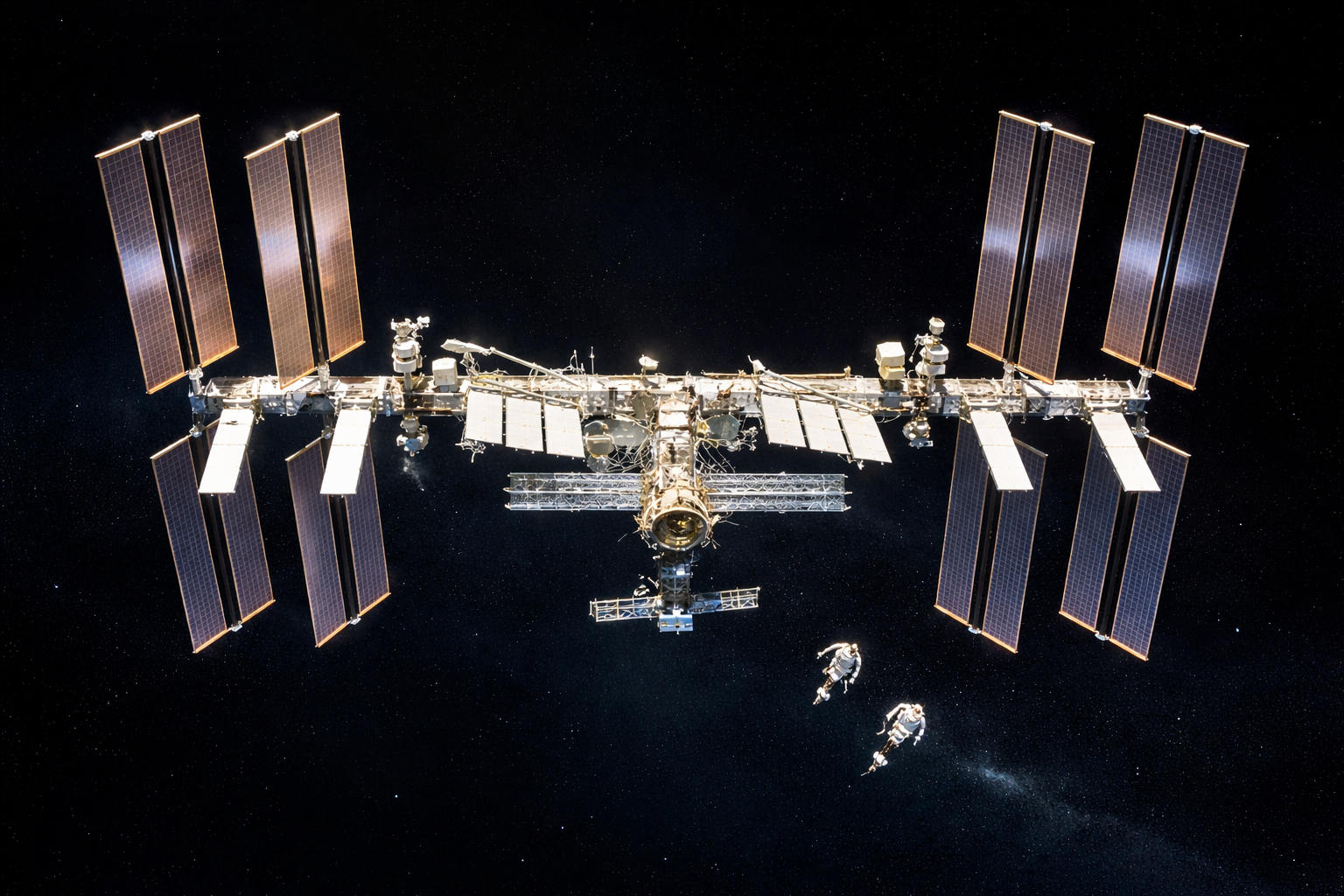
Medical technology development is another exciting area. Scientists are working on portable medical devices that can work in remote environments. For example, experiments are testing ways to produce IV fluids in space, which could help astronauts treat dehydration during long missions. On Earth, this technology could help hospitals in rural or disaster-hit areas.
Protein crystal growth experiments are helping scientists understand diseases at the molecular level. In microgravity, protein crystals grow larger and more perfectly than on Earth. This helps researchers design better drugs for diseases like cancer and Parkinson’s disease. These space-grown crystals allow scientists to study disease structures with higher precision.
Earth observation research is also a key focus. Astronauts and onboard sensors monitor climate change, forest fires, glacier melting, and ocean health. The data collected helps scientists predict natural disasters and understand environmental changes. This research directly supports global climate protection efforts.
Robotics and AI experiments are preparing humans for deep-space missions. Scientists are testing robotic assistants that could help astronauts repair equipment or perform dangerous tasks. Artificial intelligence systems are also being tested to help spacecraft operate more independently during long-distance missions.
Every experiment conducted in orbit helps scientists unlock new knowledge. The station continues to serve as humanity’s most important platform for scientific discovery, shaping the future of medicine, technology, and space exploration.
How Astronauts Live and Work Daily on the International Space Station
Life in space is very different from life on Earth. Astronauts living aboard the International Space Station follow highly structured schedules designed to balance scientific work, physical health, maintenance duties, and personal time. Every day in orbit is carefully planned by teams on Earth to ensure safety, productivity, and mission success.
Astronauts usually wake up according to Coordinated Universal Time (UTC), since the station orbits Earth about every 90 minutes, meaning they see around 16 sunrises and sunsets each day. After waking up, astronauts begin their morning routine, which includes hygiene tasks adapted for microgravity. Instead of showers, they use rinseless wipes and special no-rinse shampoos. Even simple tasks like brushing teeth require careful control to prevent water droplets from floating away.
After breakfast, astronauts start their workday. Much of their time is dedicated to scientific experiments. Research ranges from medical studies to advanced technology testing. These experiments help scientists understand how the human body reacts to space, how plants grow without gravity, and how materials behave differently in orbit. Many experiments are controlled in coordination with ground teams such as those from NASA, ensuring data is collected accurately and safely.
Exercise is a critical part of daily life. In microgravity, muscles and bones weaken over time. To prevent this, astronauts exercise for about two hours daily using special machines designed for space. These include a treadmill with harness straps, a stationary bike, and resistance exercise devices that simulate weightlifting. Regular exercise helps astronauts stay healthy during long missions.
Maintenance tasks are another important responsibility. Astronauts regularly check air filters, water recycling systems, electrical equipment, and research hardware. Because repair missions from Earth can be difficult and expensive, crews are trained to fix most problems themselves. Some repairs require spacewalks, where astronauts leave the station wearing protective spacesuits.
Food in space is carefully prepared and packaged. Astronauts eat items like tortillas, freeze-dried fruits, thermostabilized meals, and packaged snacks. Fresh food sometimes arrives through cargo missions, which is a big morale boost for crews. Eating in space requires practice because food and crumbs can float, so meals are eaten carefully using trays and sealed containers.
Communication plays a big role in daily life. Astronauts stay in constant contact with mission control teams and also get time to speak with their families. They can send emails, join video calls, and even participate in live educational sessions with students on Earth.
Sleep is also carefully managed. Astronauts sleep in small crew quarters using sleeping bags attached to walls to prevent floating around. Good sleep is essential for focus and mental health during missions that can last months.
Daily life aboard the station combines advanced science, strict discipline, teamwork, and adaptability. Astronauts must stay physically strong, mentally sharp, and technically skilled while living in one of the most extreme environments humans have ever experienced.
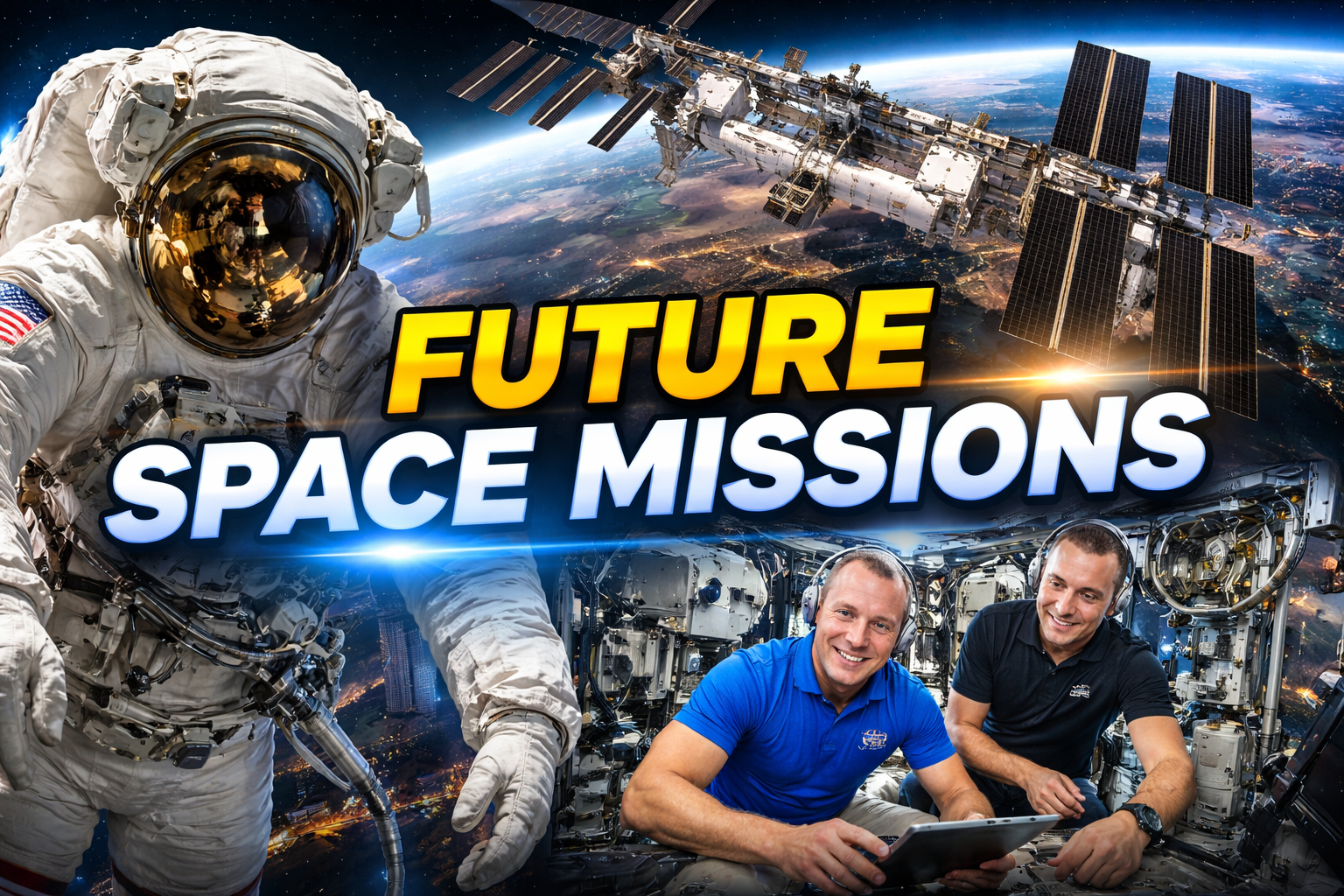
Future Space Missions and the Growing Importance of the International Space Station
Human space exploration is entering a new era where long-term missions beyond Earth orbit are becoming realistic goals. As space agencies and private companies prepare for missions to the Moon, Mars, and beyond, the International Space Station has become one of the most critical testing platforms for future space technologies. It acts as a bridge between Earth-based research and deep-space exploration, helping scientists understand how humans and machines perform in space over long periods.
Space agencies like NASA are using orbital research to prepare astronauts for upcoming lunar missions under programs such as Artemis. The station allows scientists to study how microgravity affects the human body over months, which is essential for planning multi-year missions to Mars. Research on bone density loss, muscle weakening, and radiation exposure helps engineers design safer spacecraft and better astronaut protection systems.
Private space companies such as SpaceX are also shaping the future of space travel. Regular crew and cargo missions have transformed space transportation into a more reliable system. These missions are helping develop reusable rocket technology, advanced spacecraft automation, and faster launch turnaround times. All these advancements will be necessary for building permanent human presence beyond Earth orbit.
Another growing importance of the station is technology testing. Future spacecraft systems, including advanced life-support systems, water recycling technology, and oxygen generation, are tested in orbit before being used for deep-space missions. Long-duration missions require astronauts to live independently from Earth resupply, and the station helps engineers perfect closed-loop life systems needed for survival in deep space.
Scientific research conducted in orbit is also shaping future planetary exploration. Plant growth experiments are helping scientists learn how to grow food in space environments. This research is essential for future Mars colonies, where astronauts will need to produce food locally rather than rely entirely on supplies from Earth. Similarly, material science experiments are helping create stronger, lighter spacecraft components that can withstand extreme space conditions.
International cooperation is another major factor driving future missions. Space agencies such as European Space Agency and JAXA contribute research modules, technology, and astronauts. This global partnership ensures that space exploration remains a shared human achievement rather than a competition between nations. The knowledge gained benefits science, medicine, and technology worldwide.
Looking ahead, commercial space stations are already being planned to eventually replace or supplement current orbital research platforms. However, the experience gained from decades of operations continues to guide how these next-generation stations will be designed and operated. Lessons learned about crew safety, station maintenance, and international cooperation are shaping how humanity will live and work in space in the future.
As humanity prepares for deeper space missions, orbital research platforms remain essential stepping stones. The experience gained from continuous human presence in orbit is helping transform space travel from short-term missions into long-term human exploration beyond Earth.